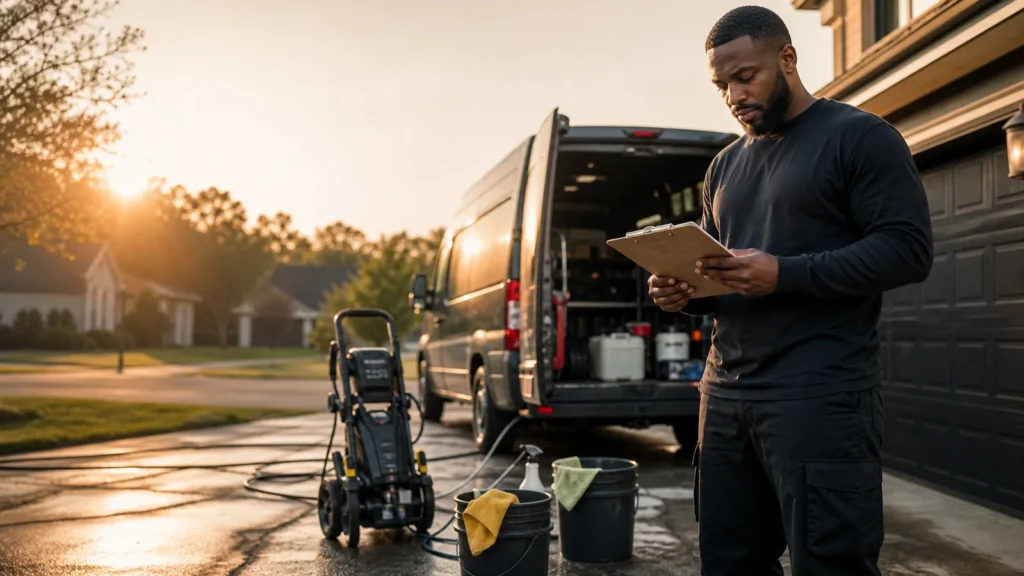
You do not need a wrapped truck and a warehouse to test a local service idea. You need a service you can deliver safely, a customer who already values the result, and a simple way to book and pay. The first $500 should reduce risk and help you complete the first jobs—not make the business look bigger than it is.
Choose a Low-Equipment Starting Offer
Look for work that matches your experience and can start with equipment you already own. Examples may include basic residential cleaning, yard cleanup, furniture assembly, mobile interior detailing, trash-bin cleaning, pet-waste removal, or simple property turnover support. Avoid regulated work unless you have the required license, training, insurance, and permits.
Validate Before You Buy
Write a one-sentence offer with a clear result and boundary: “I provide a two-hour move-out readiness clean for small apartments in [area]; deep stain removal is quoted separately.” Share it with people in the target area, contact property managers or small businesses where appropriate, and ask what would make the offer useful. Do not claim demand after one compliment—look for real quote requests or deposits.
An Illustrative $500 Budget
- $150: essential supplies and protective equipment.
- $150: licensing, registration, or insurance research and initial costs where applicable.
- $75: simple booking, phone, domain, or printed materials.
- $75: fuel and transportation reserve.
- $50: replacement and refund buffer.
This is an example, not a promise. Costs vary widely by service and location. Check city, county, and Florida requirements before taking paid work, especially for trades, chemical use, hauling, or work inside occupied property.
Create a Minimum Professional System
- A short intake form with location, timing, scope, and photos.
- A written estimate that states what is and is not included.
- A scheduling and confirmation process.
- A method for deposits, invoices, and receipts.
- A pre-job and completion checklist with photos when appropriate.
- A follow-up message that asks whether the result met the agreed scope.
Price From the Job Backward
Estimate total time, including travel, setup, cleanup, messaging, and payment collection. Add supplies, disposal fees, platform charges, insurance, taxes, and a reserve for rework. Then compare the final price with local alternatives and the value of the result. A low introductory price should still cover the work; otherwise it teaches the wrong lesson.
Find the First Five Customers
Start with direct relevance: neighbors who have the problem, local property contacts, small-business owners, community groups that permit offers, and past coworkers who know your reliability. Use one clear before-and-after example with permission. Never buy reviews or post misleading photos.
A 30-Day Test
- Week 1: verify rules, define scope, and obtain the essential setup.
- Week 2: complete two controlled jobs and record actual time and costs.
- Week 3: improve pricing, checklist, and photos; ask for honest feedback.
- Week 4: repeat the best channel and decide whether demand supports more investment.
Your Next Move
Choose one service, one area, and one clearly bounded result. Get three serious conversations before buying optional equipment. Then use the Hustle Quality resource library to build the checklist, estimate, and follow-up system.